

Pillow Market to Reach USD 28,600 Billion by 2035 as Demand for Sustainable Sleep Solutions Expands
Pillow Market
Rising preference for comfort, wellness-focused sleep products, and eco-friendly materials is reshaping global pillow industry dynamics
Rising demand for personalized comfort and eco-friendly bedding is reshaping how manufacturers design and position pillow products worldwide.”
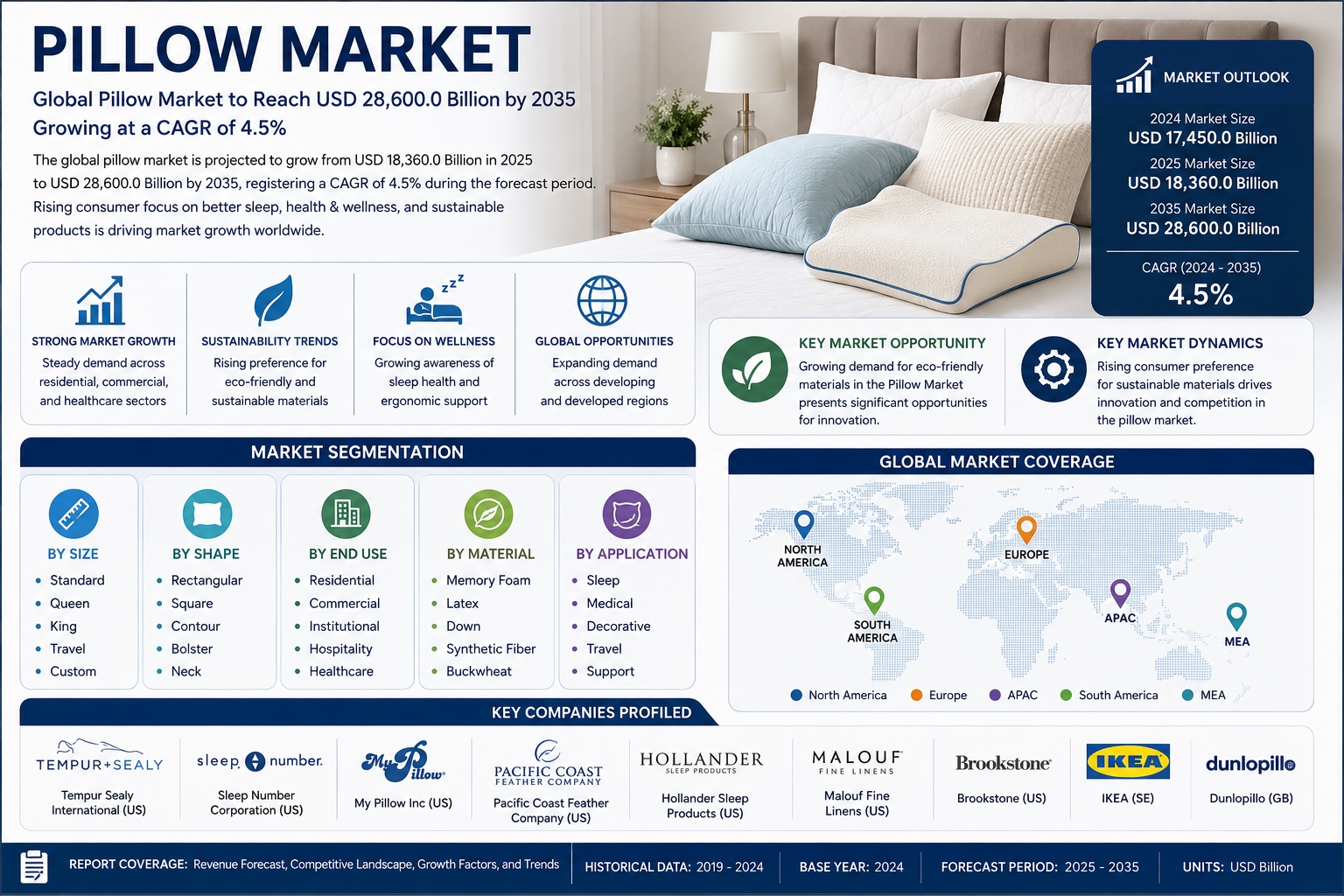
NEW YORK, NY, UNITED STATES, June 23, 2026 /EINPresswire.com/ -- The global Pillow Market is witnessing steady expansion as consumer awareness around sleep quality, ergonomics, and sustainable living continues to rise. According to the latest market research, the industry is projected to grow from USD 18,360.0 billion in 2025 to approximately USD 28,600.0 billion by 2035, reflecting a compound annual growth rate (CAGR) of 4.5% during the forecast period.— Market Research Future (MRFR)
The market was valued at USD 17,450.0 billion in 2024 and is expected to maintain consistent growth momentum as manufacturers focus on material innovation, product customization, and comfort-driven design improvements. Increasing demand across residential, hospitality, healthcare, and institutional sectors is further supporting global expansion.
Pillows, once considered basic household necessities, are now evolving into specialized comfort and wellness products designed for improved sleep posture, medical support, and lifestyle enhancement.
Growing Focus on Sleep Health Drives Market Expansion
One of the most significant factors influencing the Pillow Market is the rising global awareness of sleep health. Consumers are increasingly recognizing the connection between quality sleep and overall physical and mental well-being. Industry surveys show that sleep quality is now among the top three wellness priorities for many households, and a growing share of consumers are replacing pillows every 18 to 24 months to maintain comfort and hygiene.
This shift has led to greater demand for ergonomically designed pillows that support spinal alignment, reduce neck pain, and enhance sleep quality. Memory foam and contour pillows are particularly gaining traction among consumers seeking orthopedic benefits and pressure relief. In premium bedding categories, ergonomic pillows are often priced 15% to 30% higher than standard models, reflecting stronger demand for specialized support features.
Healthcare professionals are also emphasizing the importance of sleep posture, further supporting demand for medical-grade and support-oriented pillow designs. As a result, manufacturers are investing in research and development to create advanced products that combine comfort with therapeutic benefits. The segment for posture-support pillows is expected to grow faster than the broader market, supported by aging populations and rising cases of neck and back discomfort.
Sustainability and Eco-Friendly Materials Transform Product Innovation
The growing preference for sustainable and eco-friendly materials is reshaping product development across the Pillow Market. Consumers are increasingly opting for pillows made from natural, organic, and biodegradable materials such as latex, buckwheat, and responsibly sourced down alternatives. In many developed markets, eco-conscious buyers are willing to pay a premium of 10% to 20% for products with verified sustainability claims.
Synthetic fiber manufacturers are also innovating to produce recyclable and environmentally responsible filling materials that reduce environmental impact without compromising comfort. Recycled polyester and plant-based blends are gaining visibility as brands seek to lower carbon footprints while maintaining affordability and durability.
Sustainability has become a key purchasing factor, particularly among environmentally conscious consumers in developed markets. Brands are responding by introducing eco-labeled products, reducing plastic packaging, and adopting sustainable manufacturing practices. Retail data indicates that products marketed with organic, cruelty-free, or low-waste packaging attributes often achieve stronger conversion rates in online channels.
This shift toward greener products is expected to remain a major driver of innovation throughout the forecast period.
Get Full PDF Sample Copy of Report: (Including Full TOC, List of Tables & Figures, Chart) @ https://www.marketresearchfuture.com/sample_request/2766
Increasing Demand from Hospitality and Healthcare Sectors
Beyond residential use, commercial sectors such as hospitality and healthcare are significantly contributing to market growth.
The hospitality industry continues to invest in premium bedding solutions to enhance guest comfort and satisfaction. High-quality pillows have become an essential component of hotel branding strategies, with many establishments offering multiple pillow types to cater to individual guest preferences. Mid- to high-end hotels commonly provide two to four pillow options per room, including soft, firm, hypoallergenic, and decorative variants, to improve guest experience scores.
In the healthcare sector, specialized pillows are being used for patient recovery, pressure relief, and orthopedic support. Hospitals and care facilities increasingly require contour, neck, and medical support pillows designed for long-term patient comfort and rehabilitation. Replacement cycles in institutional settings are often shorter than in residential use, with bulk procurement driven by hygiene standards and frequent laundering requirements.
Institutional demand, including from dormitories and assisted living facilities, further strengthens the market’s growth outlook. Bulk purchasing from these segments supports steady volume sales and creates recurring demand for durable, easy-to-clean, and cost-effective pillow products.
Pillow Size Segmentation Reflects Consumer Diversity
The Pillow Market offers a wide range of size options designed to meet varying consumer preferences and sleeping habits.
Standard pillows remain widely used due to their affordability and compatibility with most bedding systems. Queen and king-size pillows are gaining popularity among consumers seeking enhanced comfort and larger sleep surfaces. Standard sizes continue to account for the largest share of unit sales, while larger sizes are increasingly favored in premium bedding and hospitality applications.
Travel pillows represent a fast-growing segment, driven by increasing travel activity and demand for portable comfort solutions. Custom pillows are also gaining attention as consumers seek personalized sleep products tailored to specific ergonomic needs. Travel and compact support pillows are particularly popular in e-commerce, where portability and convenience are major purchase drivers.
This diversification in product sizing highlights the market’s shift toward personalization and user-centric design. As consumers become more selective, size variety is emerging as a key differentiator across both mass-market and premium product lines.
Shape-Based Innovation Enhances Comfort and Functionality
Product innovation in pillow shapes is playing a key role in market differentiation.
Rectangular pillows continue to dominate due to their traditional design and versatility. However, contour and neck-shaped pillows are experiencing rising demand due to their ergonomic benefits. These specialized shapes are increasingly preferred by consumers with posture concerns, and they are often recommended for side sleepers and individuals with chronic neck stiffness.
Square pillows are commonly used for decorative and support purposes, particularly in living spaces and hospitality environments. Bolster pillows are widely used for body support and alignment, especially in yoga, meditation, and therapeutic applications. Decorative and support-oriented shapes are also seeing stronger uptake in urban households where multifunctional home products are in demand.
The growing popularity of specialized shapes reflects increasing consumer interest in health-oriented and multifunctional sleep products. Shape innovation is also helping brands expand into adjacent categories such as wellness, home décor, and therapeutic support.
Material Trends Highlight Comfort and Performance
Material selection plays a crucial role in determining pillow comfort, durability, and performance.
Memory foam remains one of the most popular materials due to its ability to conform to body shape and provide pressure relief. Latex pillows are valued for their natural composition, breathability, and long-lasting durability. In premium segments, memory foam and latex products often command higher margins because of their performance benefits and longer replacement cycles.
Down pillows continue to be preferred for their softness and luxury appeal, particularly in premium hospitality settings. Synthetic fiber pillows offer affordability and hypoallergenic properties, making them widely accessible to mass-market consumers. Synthetic fills remain the most common choice in value-oriented categories due to lower production costs and broad retail availability.
Buckwheat pillows, though niche, are gaining popularity among health-conscious consumers seeking natural support and improved airflow during sleep. Material innovation continues to be a key area of investment as manufacturers aim to balance comfort, sustainability, and affordability. Across the market, breathable, washable, and temperature-regulating materials are becoming increasingly important purchase criteria.
Application Expansion Supports Market Diversification
The Pillow Market serves multiple application areas beyond traditional sleep use.
Sleep applications remain the dominant segment, driven by increasing focus on rest quality and comfort. Medical applications are expanding as healthcare providers integrate specialized pillows into treatment and recovery programs. In many markets, sleep-related products account for the majority of volume sales, while medical and therapeutic applications are among the fastest-growing niches.
Decorative pillows are widely used in interior design, contributing to aesthetic enhancement in residential and commercial spaces. Travel pillows are increasingly adopted by frequent travelers seeking comfort during long journeys. Decorative products often generate strong seasonal demand, especially during home renovation cycles and holiday shopping periods.
Support pillows, designed for posture correction and body alignment, are gaining traction among individuals with orthopedic concerns. This broad application base is strengthening the overall market resilience and helping manufacturers diversify revenue streams across consumer, institutional, and healthcare channels.
Residential Sector Continues to Lead End-Use Demand
The residential sector remains the largest end-use segment in the Pillow Market.
Consumers are increasingly investing in home comfort products that enhance sleep quality and overall lifestyle. Growing awareness of wellness and self-care has led to higher spending on premium bedding products, including pillows with specialized features. Replacement behavior in households is also supporting recurring demand, with many consumers upgrading pillows as part of broader mattress and bedding refresh cycles.
The commercial sector, including retail spaces and offices, is also contributing to demand through decorative and functional applications. Institutional demand from schools, dormitories, and care facilities continues to grow steadily, while the hospitality sector remains a key driver of premium product adoption. Residential purchases still account for the largest share of total demand, but commercial and institutional segments are becoming increasingly important for volume stability.
Digital Retail Channels Boost Market Accessibility
The rise of online retail platforms has significantly improved accessibility to a wide range of pillow products.
Consumers now have access to detailed product descriptions, customer reviews, and comparison tools that simplify purchasing decisions. E-commerce platforms have enabled manufacturers to reach a broader customer base and expand their global footprint. Online channels are particularly effective for pillow sales because consumers can compare fill materials, firmness levels, dimensions, and price points before purchase.
Offline retail channels, including specialty bedding stores and department stores, continue to play an important role, particularly for consumers who prefer physical product testing before purchase. Many shoppers still value in-store trials for assessing firmness, loft, and texture, especially when buying premium or orthopedic pillows.
The combination of online and offline distribution channels is creating a balanced and highly accessible market ecosystem. As digital retail continues to expand, brands that offer strong product education, flexible return policies, and clear performance data are likely to gain a competitive advantage.
Regional Outlook Shows Global Expansion
North America remains a leading market due to high consumer spending on home comfort products, strong awareness of sleep health, and widespread adoption of premium bedding solutions. The United States accounts for the largest share of regional demand, supported by a mature retail ecosystem, strong e-commerce penetration, and frequent product replacement cycles. Canada also contributes steadily, with growing interest in ergonomic and hypoallergenic pillows. The region benefits from well-established retail infrastructure, a strong presence of major bedding brands, and rising demand from both residential and hospitality buyers.
Europe demonstrates steady growth driven by sustainability trends, increasing demand for eco-friendly home products, and a strong preference for high-quality sleep accessories. Germany, the United Kingdom, France, Italy, and the Nordic countries are key contributors to regional demand, with consumers showing greater interest in organic fillings, recyclable materials, and certified textile products. The region’s aging population is also supporting demand for orthopedic and support pillows, while hotel and healthcare sectors continue to invest in premium and specialized bedding solutions.
Asia-Pacific is expected to witness the fastest growth during the forecast period. Rising disposable incomes, rapid urbanization, expanding middle-class populations, and increasing awareness of sleep wellness are fueling demand for both affordable and premium pillow products. China, India, Japan, South Korea, and Australia are major markets, with China and India benefiting from large consumer bases and expanding online retail channels. Growth in the region is further supported by rising housing development, increasing hotel construction, and greater adoption of branded home comfort products.
South America and the Middle East & Africa are also experiencing gradual growth supported by improving retail penetration, expanding urban populations, and increasing consumer awareness of sleep wellness. Brazil and Argentina are leading markets in South America, while the Middle East is seeing stronger demand in the UAE, Saudi Arabia, and other Gulf countries due to hospitality expansion and rising premium home furnishing purchases. In Africa, South Africa remains an important market, with growth driven by improving distribution networks and a slowly expanding middle-income consumer base.
Competitive Landscape and Key Players
The Pillow Market features a competitive landscape with strong participation from global and regional manufacturers.
Key companies include:
• Tempur Sealy International (US)
• Sleep Number Corporation (US)
• My Pillow Inc (US)
• Pacific Coast Feather Company (US)
• Hollander Sleep Products (US)
• Malouf Fine Linens (US)
• Brookstone (US)
• IKEA (Sweden)
• Dunlopillo (United Kingdom)
Companies are focusing on product innovation, sustainable materials, and ergonomic design improvements to strengthen their market position. Strategic partnerships, product diversification, and expansion into emerging markets remain key growth strategies.
Future Outlook
The future of the Pillow Market is expected to be shaped by continuous innovation in materials, growing demand for personalized sleep solutions, and increasing consumer focus on wellness-oriented living.
Technological advancements in sleep tracking, smart bedding integration, and ergonomic design are likely to influence product development in the coming years. Sustainability will also remain a central theme as manufacturers transition toward environmentally responsible production practices.
With steady growth projected through 2035, the Pillow Market is positioned to remain a vital segment within the global home comfort and wellness industry.
Discover Related Research Reports By Market Research Future:
Sleep Supplements Market
https://www.marketresearchfuture.com/reports/sleep-supplements-market-11488
Mattress Market
https://www.marketresearchfuture.com/reports/mattress-market-7706
Baby Mattresses Market
https://www.marketresearchfuture.com/reports/baby-mattresses-market-24047
Sagar Kadam
Market Research Future
+1 628-258-0071
email us here
Visit us on social media:
LinkedIn
Facebook
X
Legal Disclaimer:
EIN Presswire provides this news content "as is" without warranty of any kind. We do not accept any responsibility or liability for the accuracy, content, images, videos, licenses, completeness, legality, or reliability of the information contained in this article. If you have any complaints or copyright issues related to this article, kindly contact the author above.
